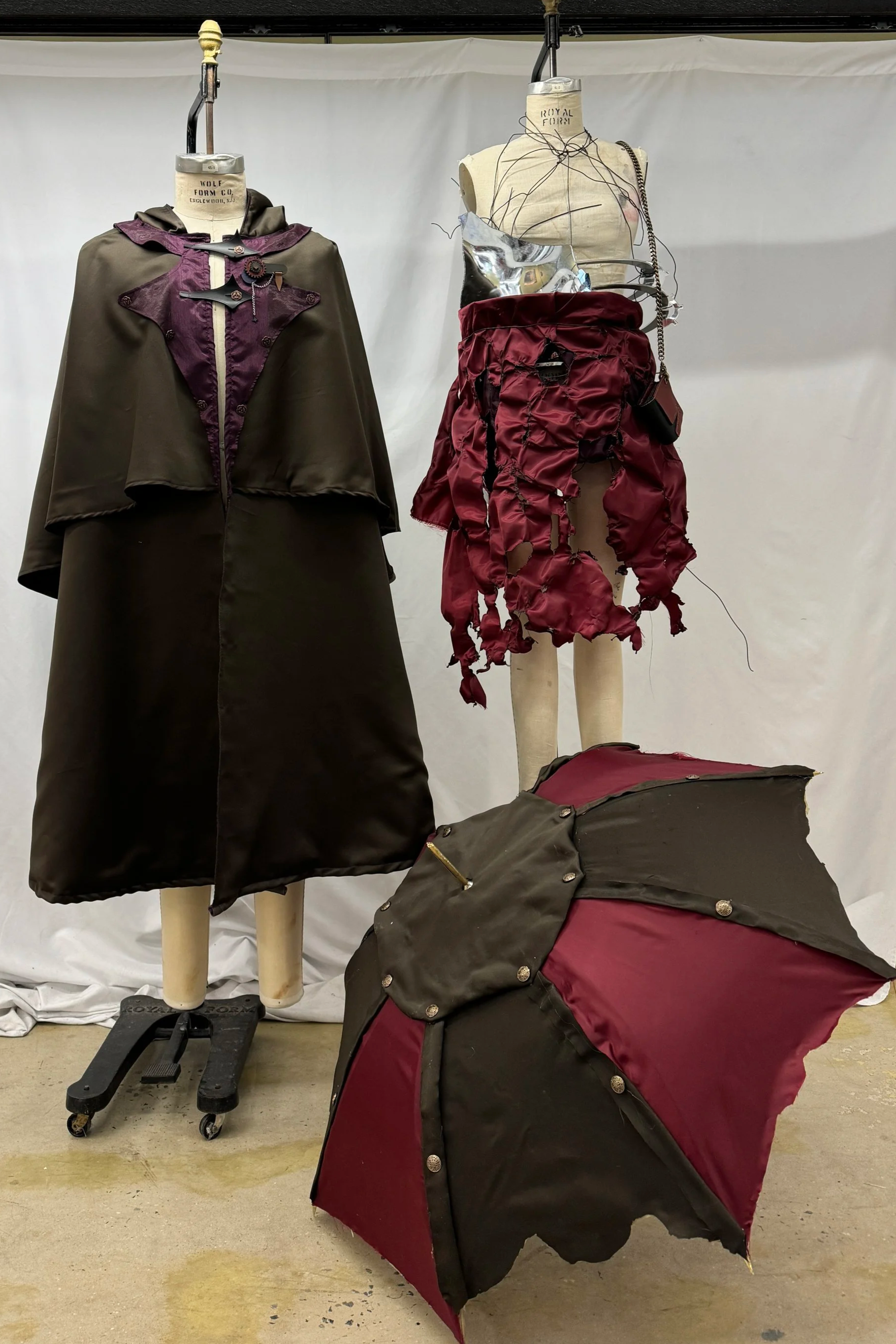
Echo of Gears
An interactive accessory that brings mechanical art into daily life, offering users a playful, engaging wearable experience.
Inspiration
Inspired by the complexity of gears and watch mechanisms, the design uses circular forms, Roman numerals, and industrial details to evoke movement and depth.
Overview
This project translates steampunk junkyard aesthetics into wearable, everyday design. It combines industrial references with contemporary form and sustainable materials to create an accessory that expresses personality and delivers functionality.
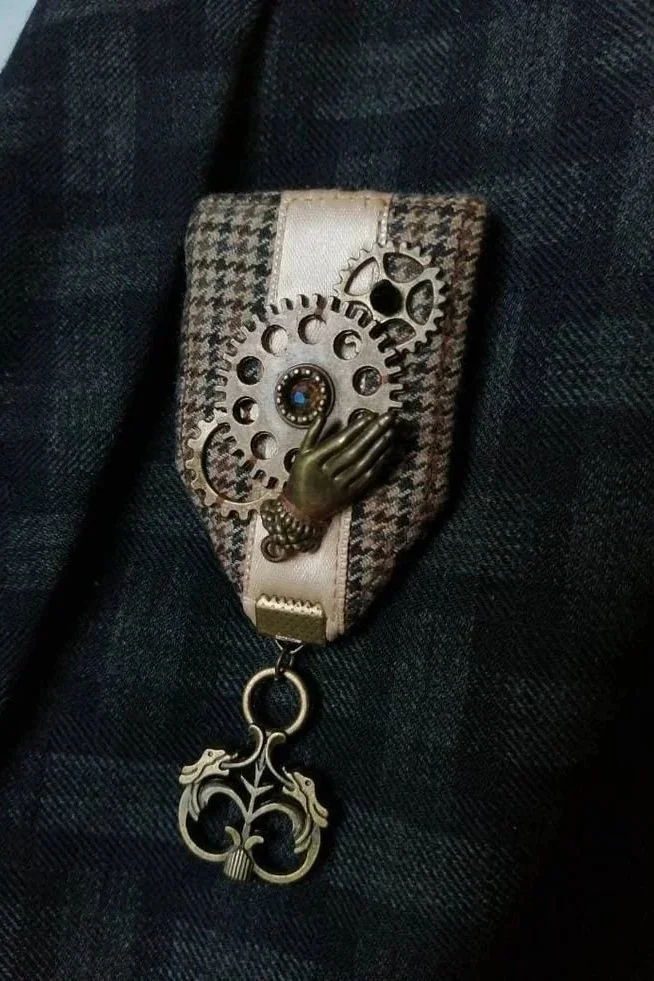
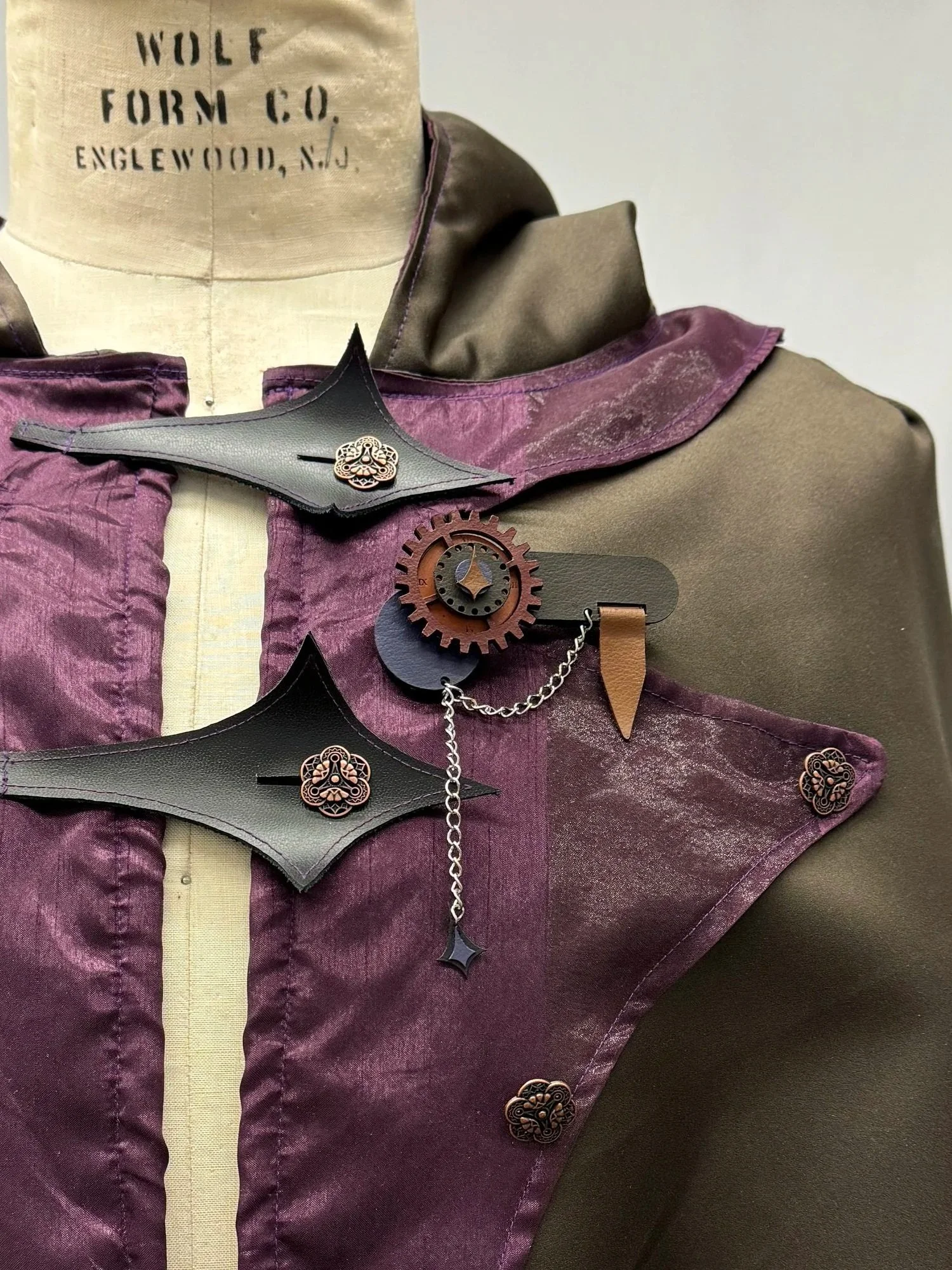
The final brooch integrates mechanical rotation, transforming a static object into an interactive piece.
Defining the Challenge
How can a small wearable object feature real mechanical movement while remaining practical and refined?
Exploration
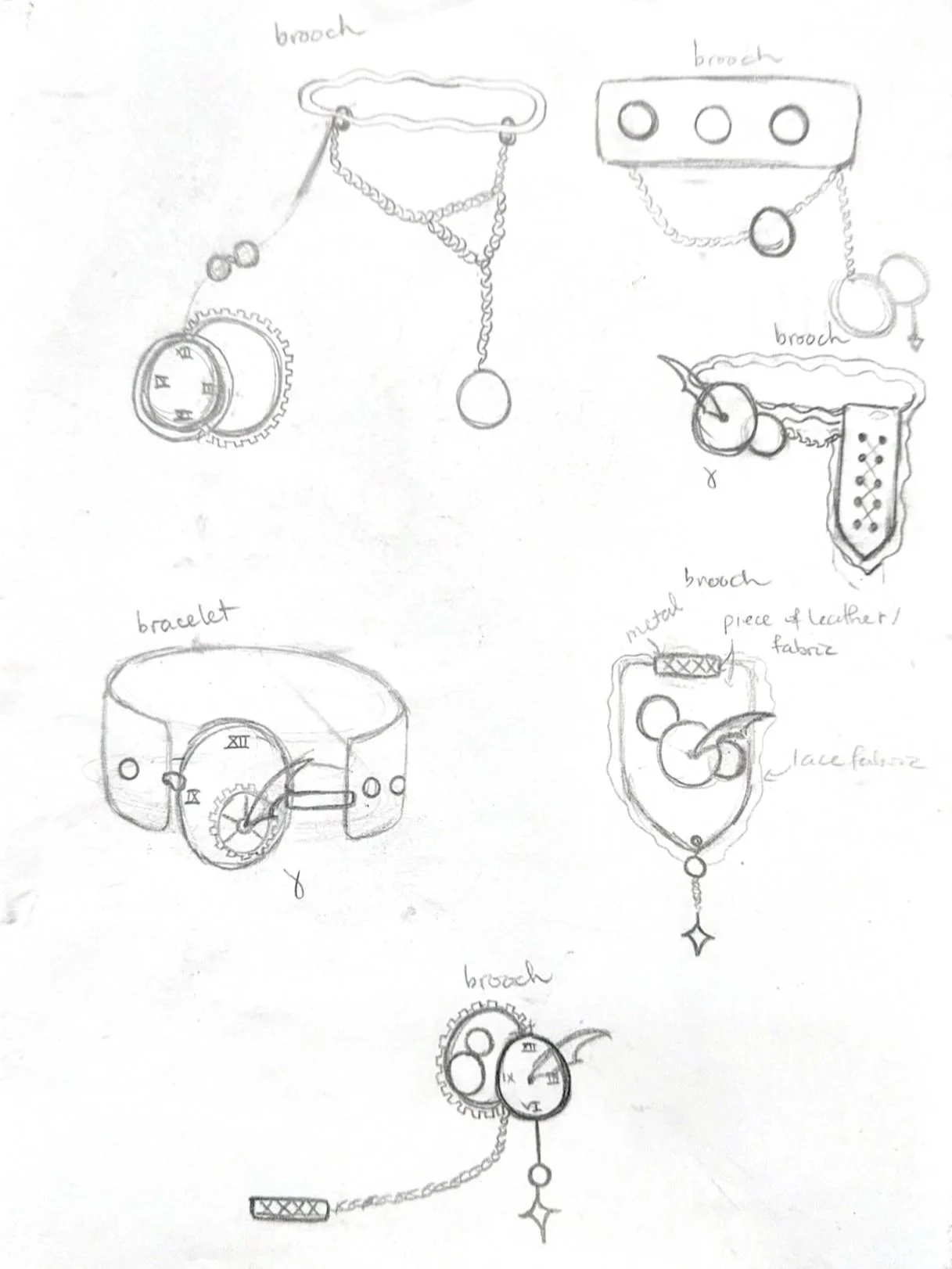
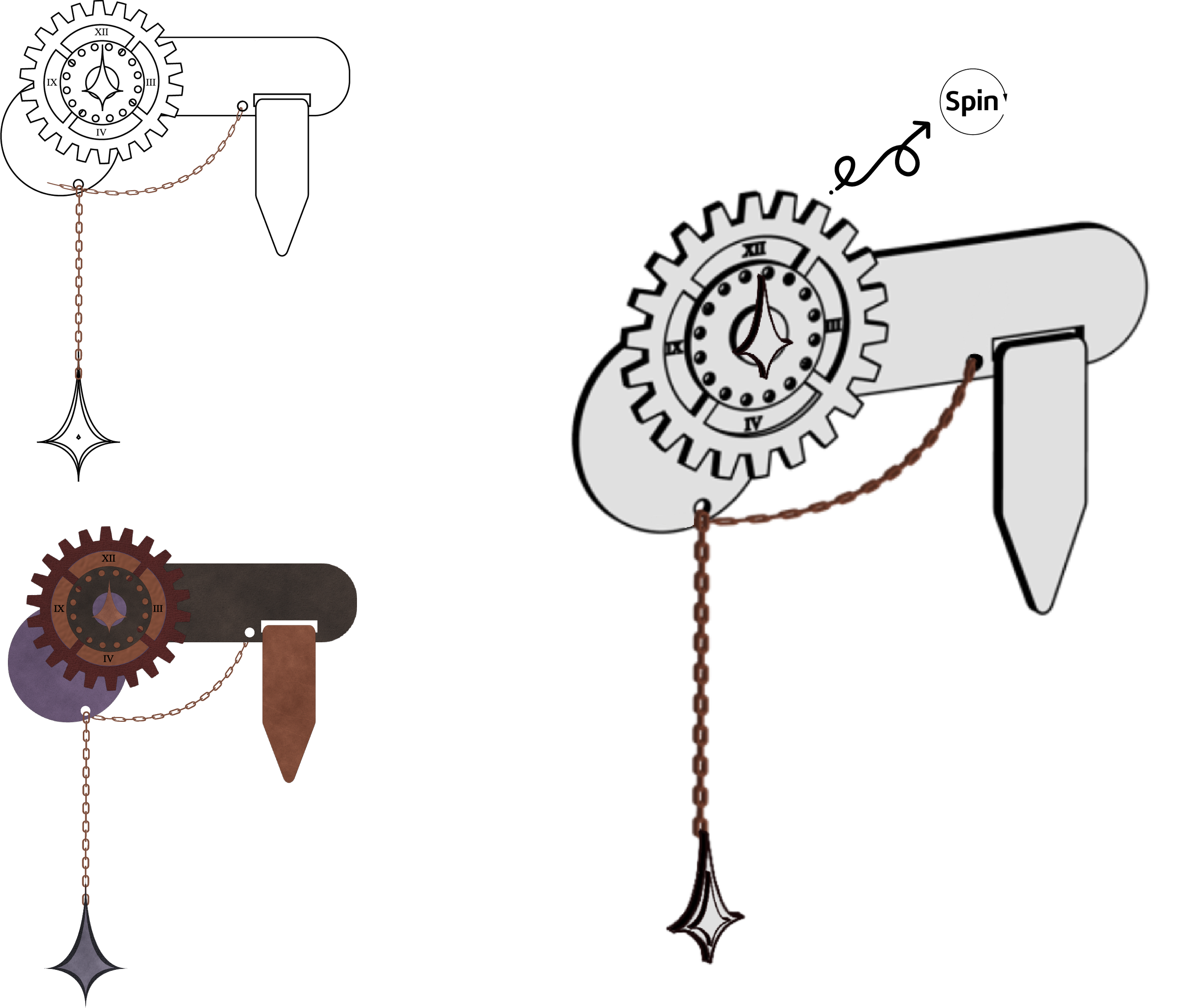
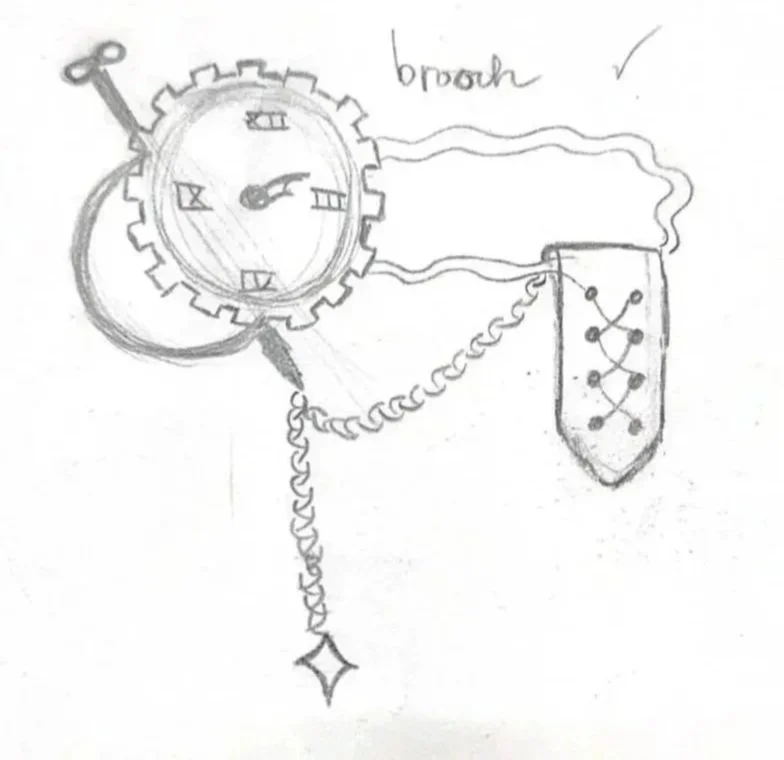
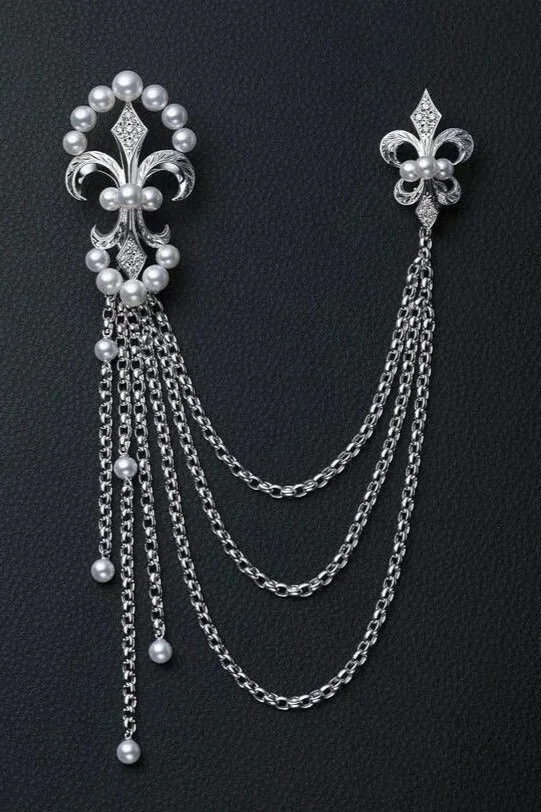
Early sketches explored a range of accessories, from bracelets to brooches. This open process defines form, layering, and mechanical integration.
This early exploration reveals opportunities for interaction and movement to determine how to translate the steampunk aesthetic into wearable forms.
Prototype
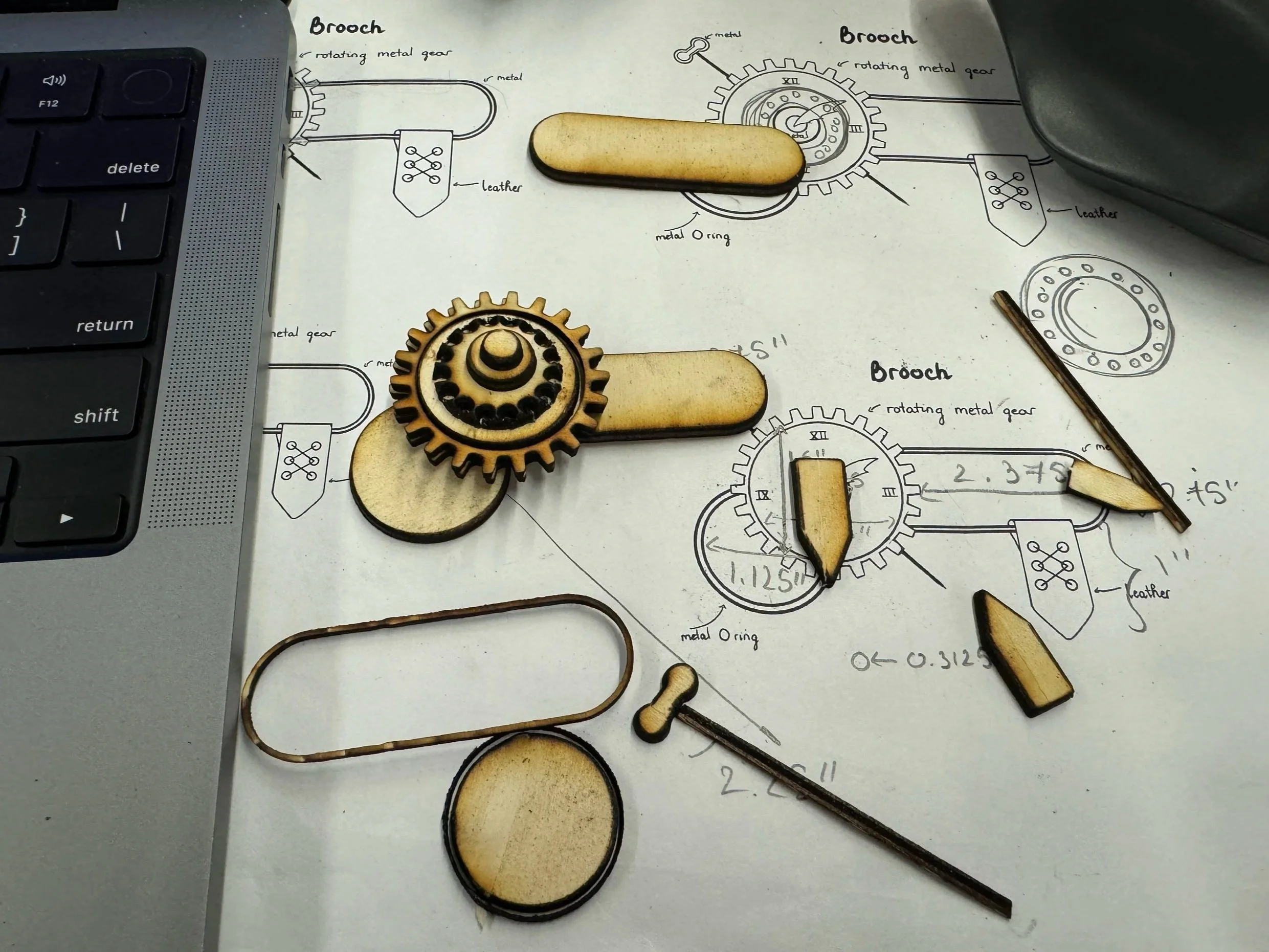
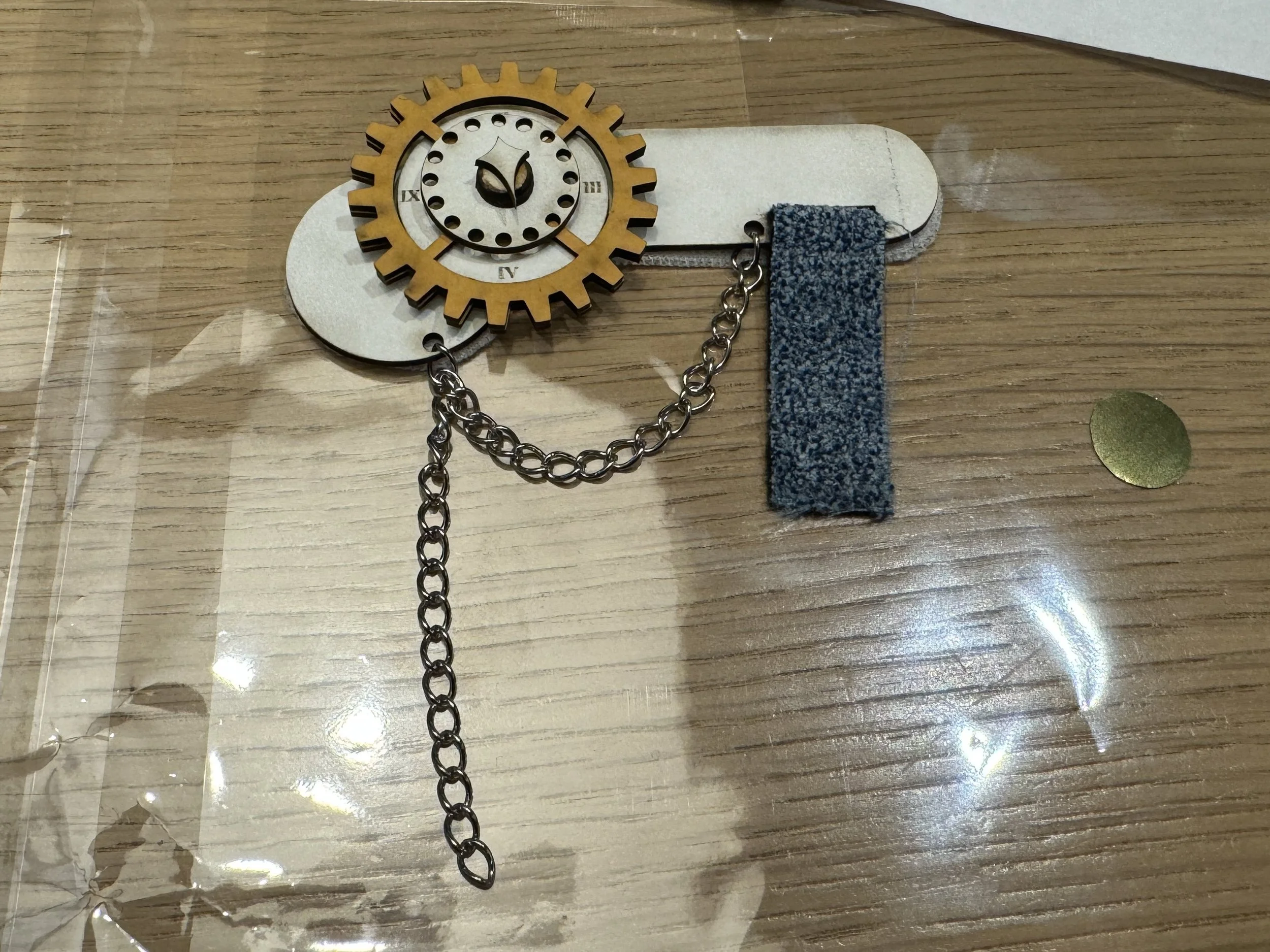
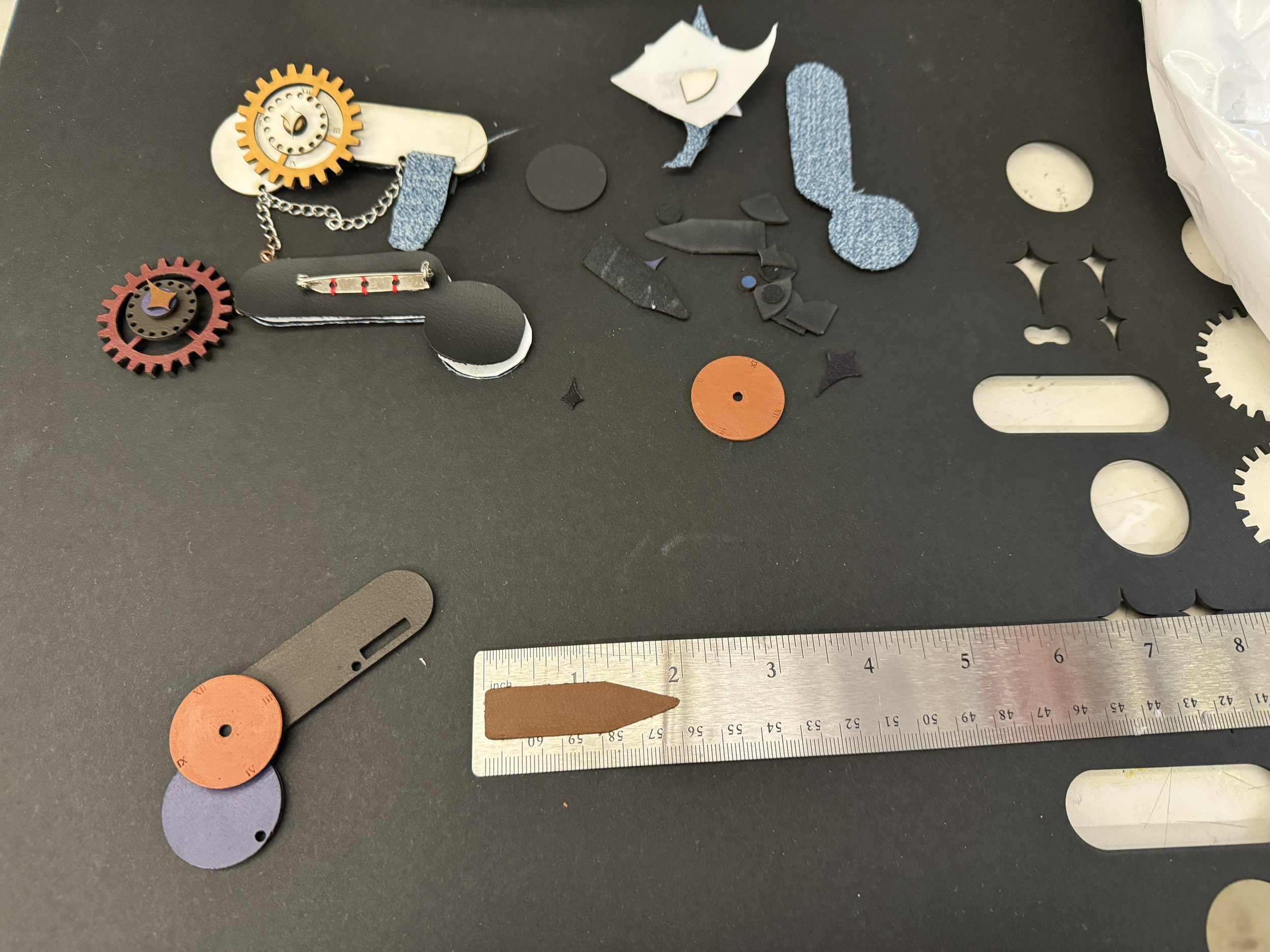
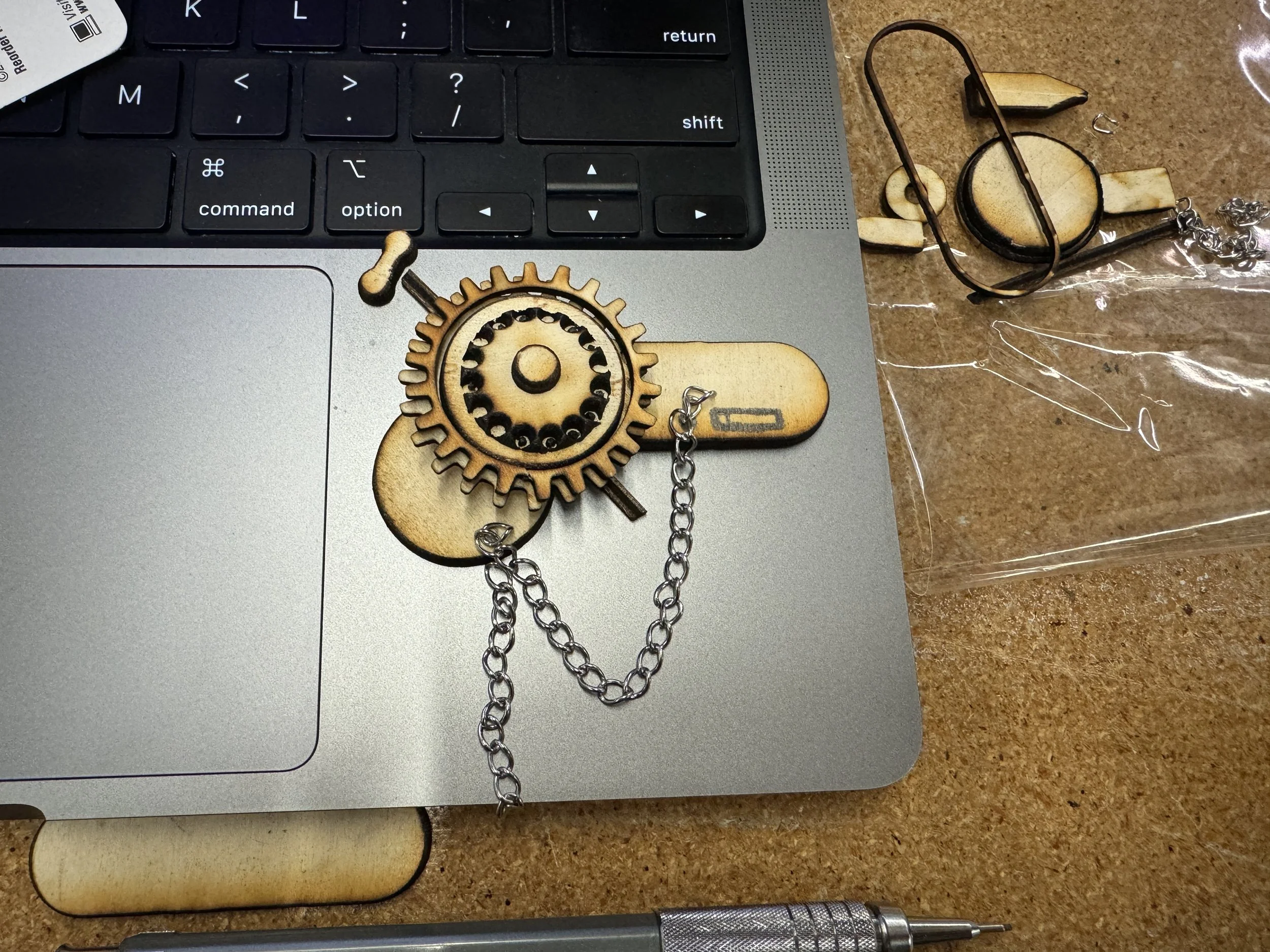
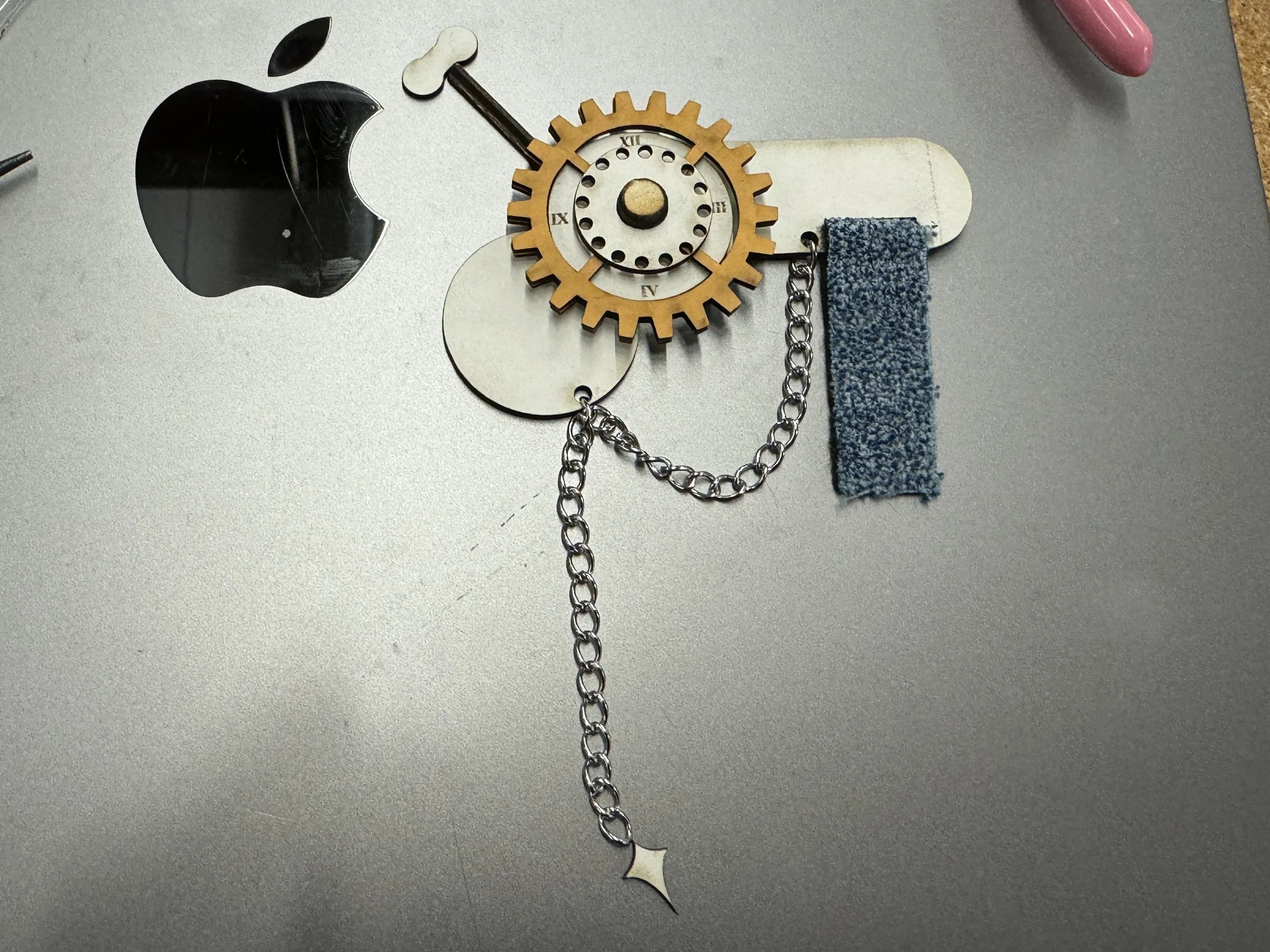
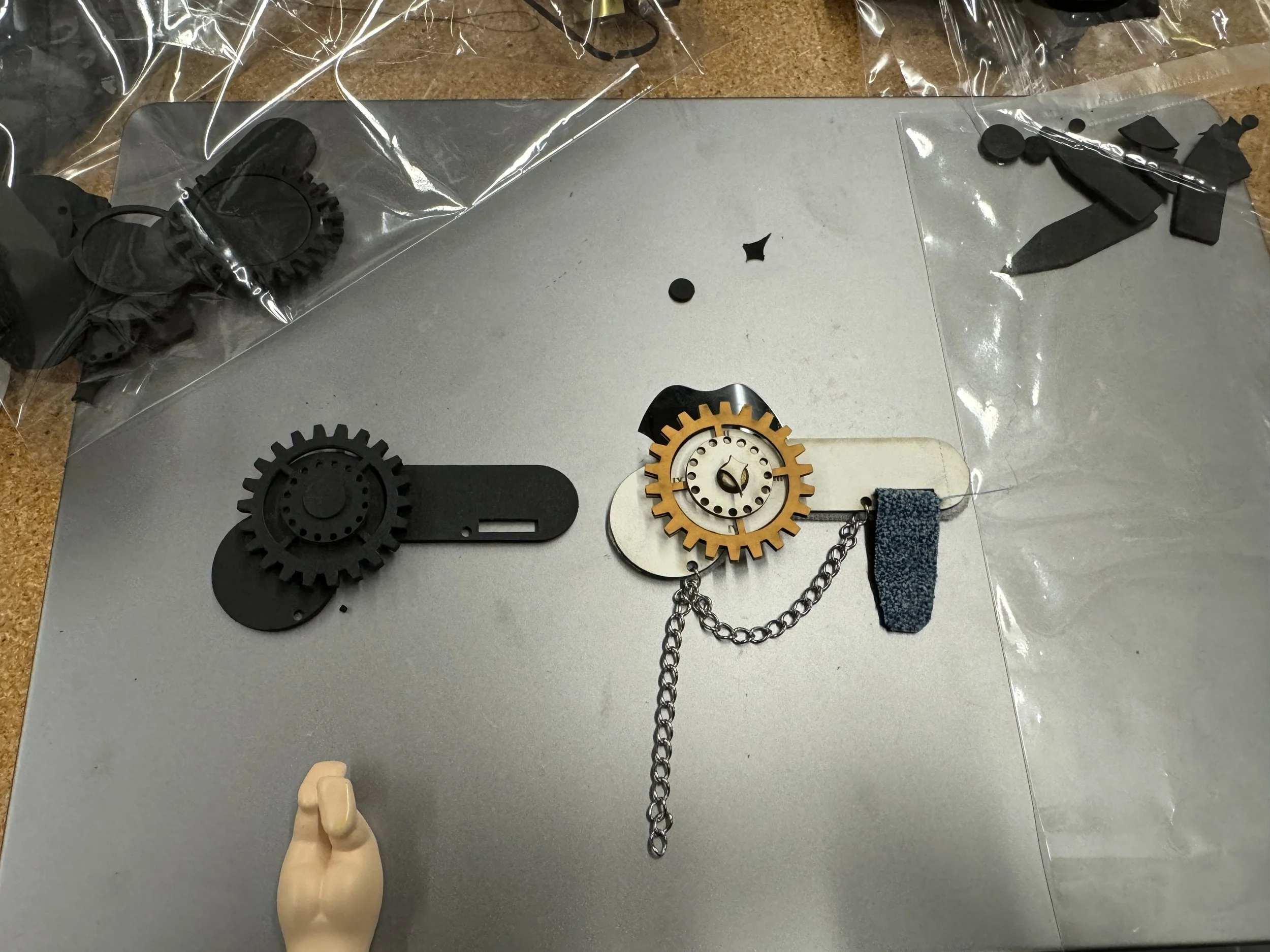
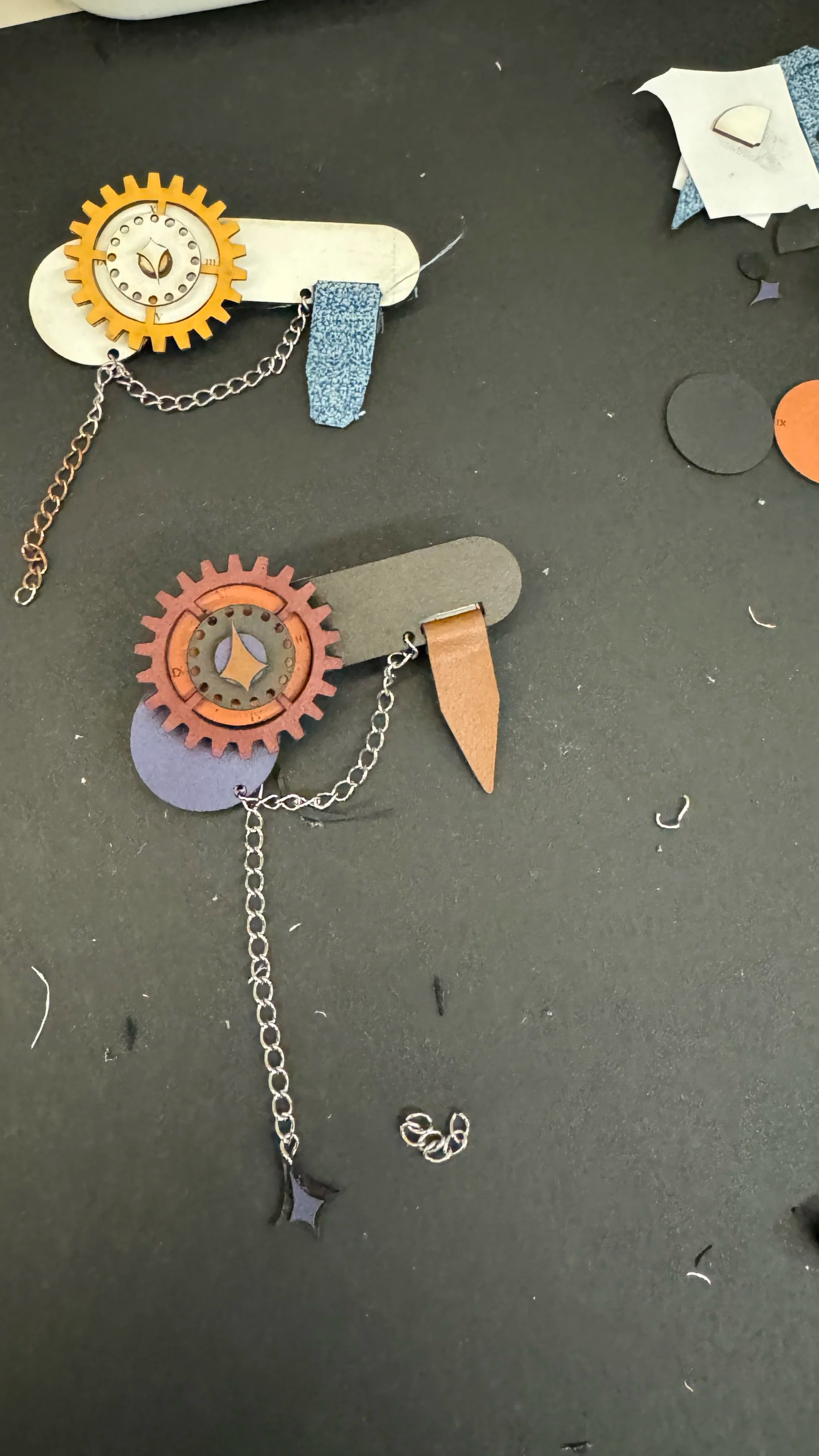
Early prototypes evaluated rotational functionality within a compact frame. Multiple iterations honed the mechanism, balance, and joint integrity.
Adobe Illustrator
Laser Cut
Design Specification
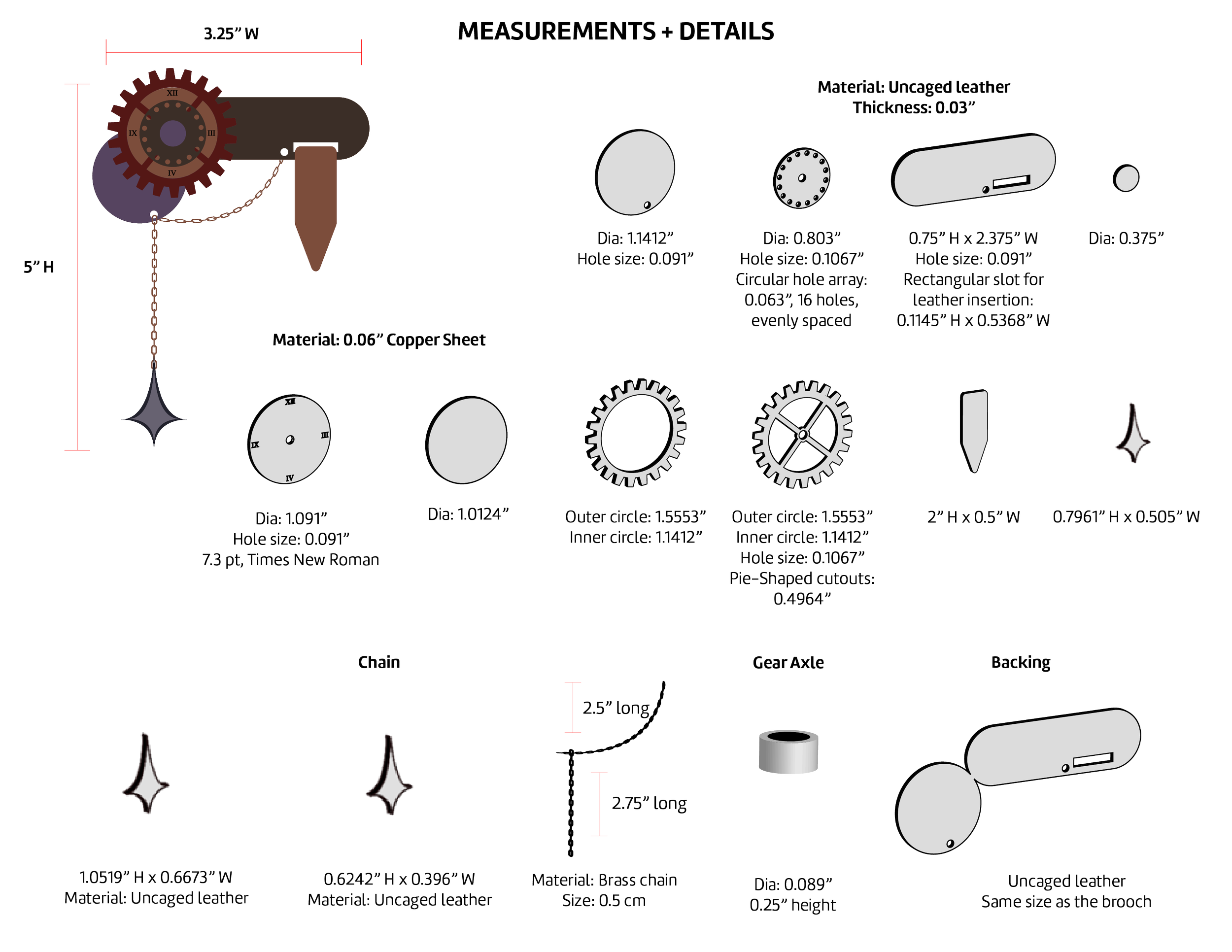
Technical drawings set precise dimensions, layers, and assembly.
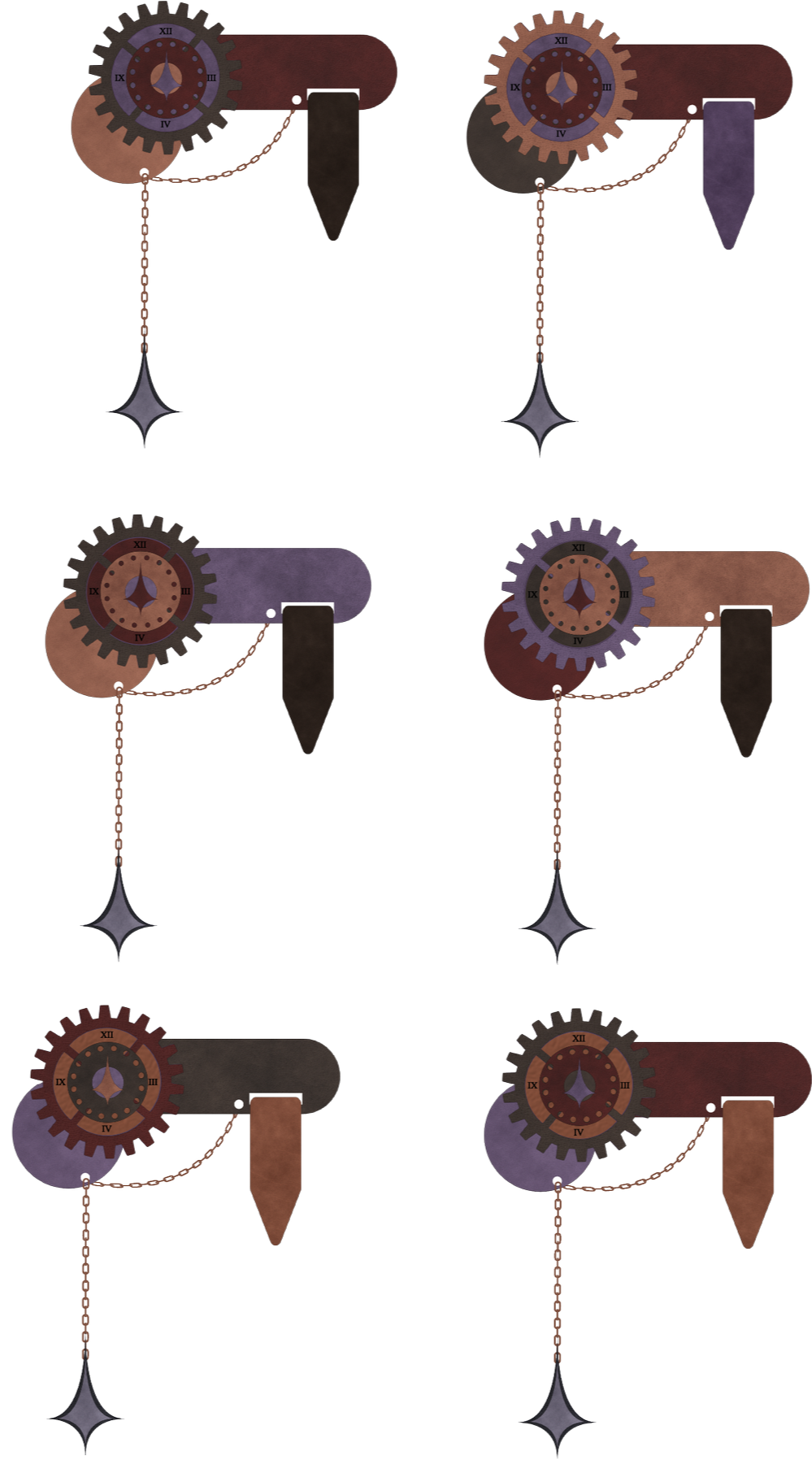
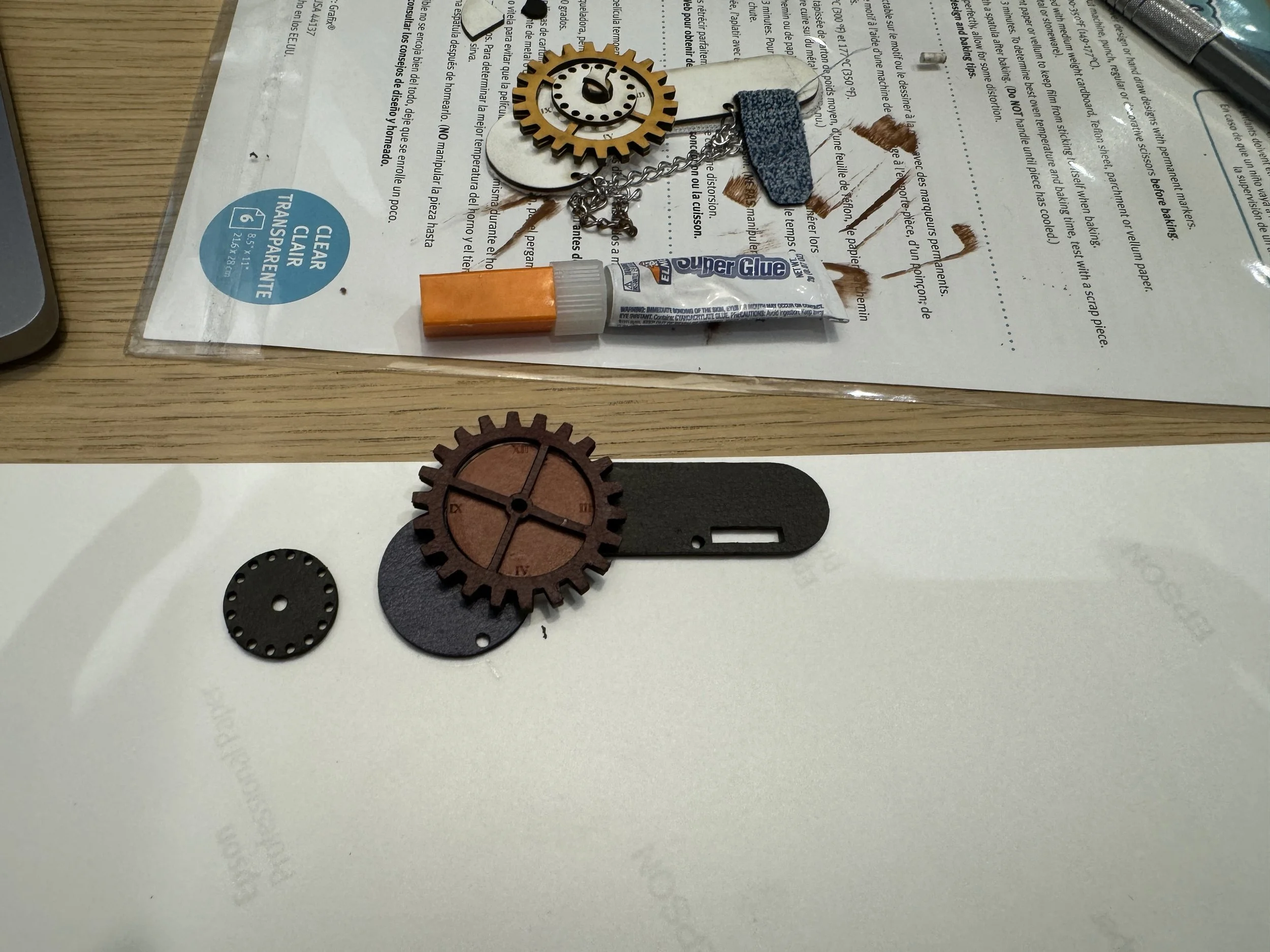
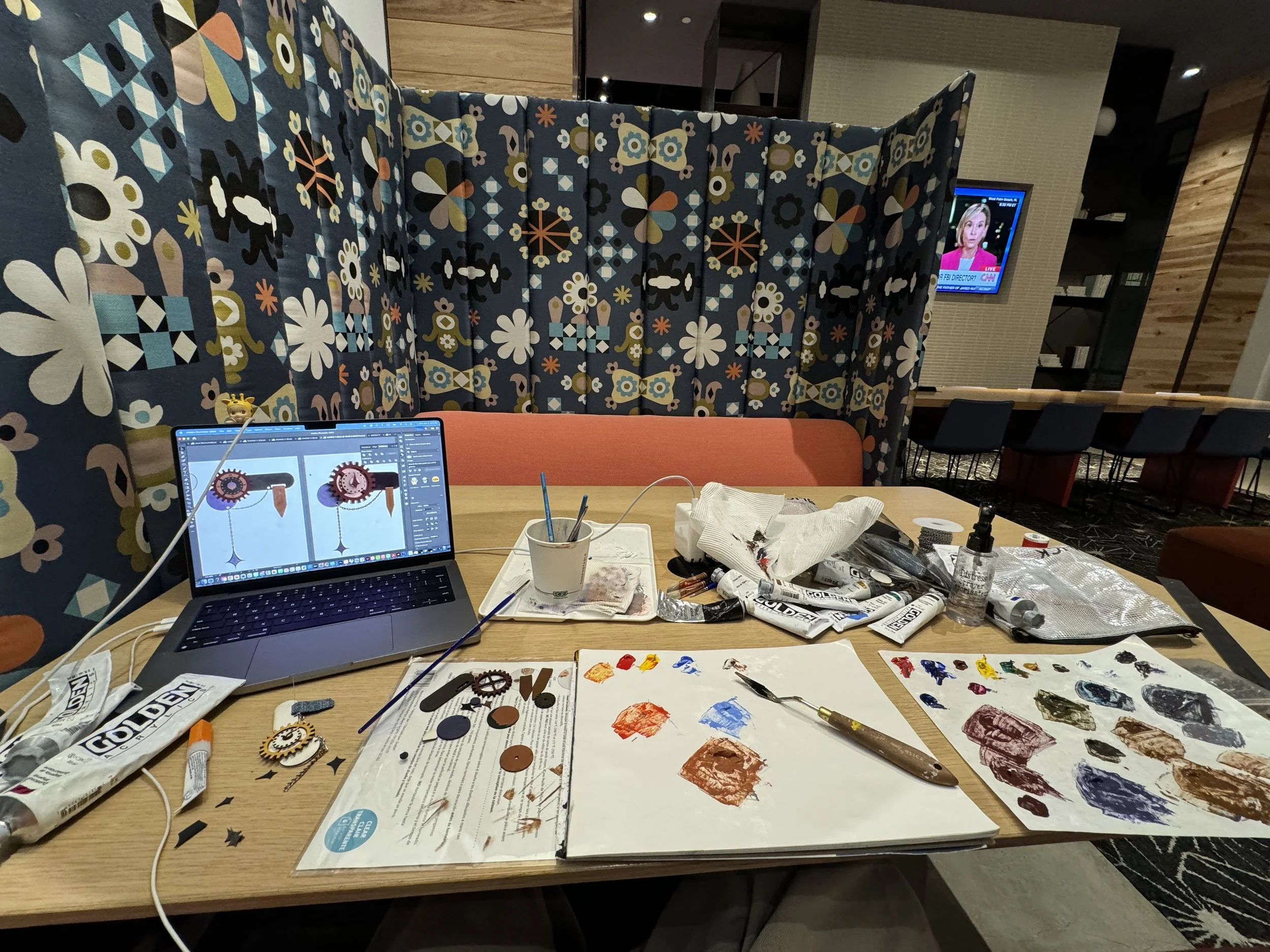
Color studies were essential in determining how individual elements would work together as a cohesive composition.
Design Specification
The final brooch achieves a key outcome: it successfully integrates layered forms, rotating elements, and dynamic details, creating a visually intricate and physically engaging piece.
This project is part of a collaborative collection exploring steampunk through sustainable materials. Each piece shares a visual language yet retains individual style.
Process
All parts were created as 2D vector files and laser-cut for precision. Pieces were assembled with adhesive and stitching, bringing digital design into physical form.
Acrylic paint was applied on leather to achieve the desired palette, allowing control over the final look.